Sanskritist: Nadia Adal
Written by Milton McGrory, 3rd year, BA Chinese with Korean
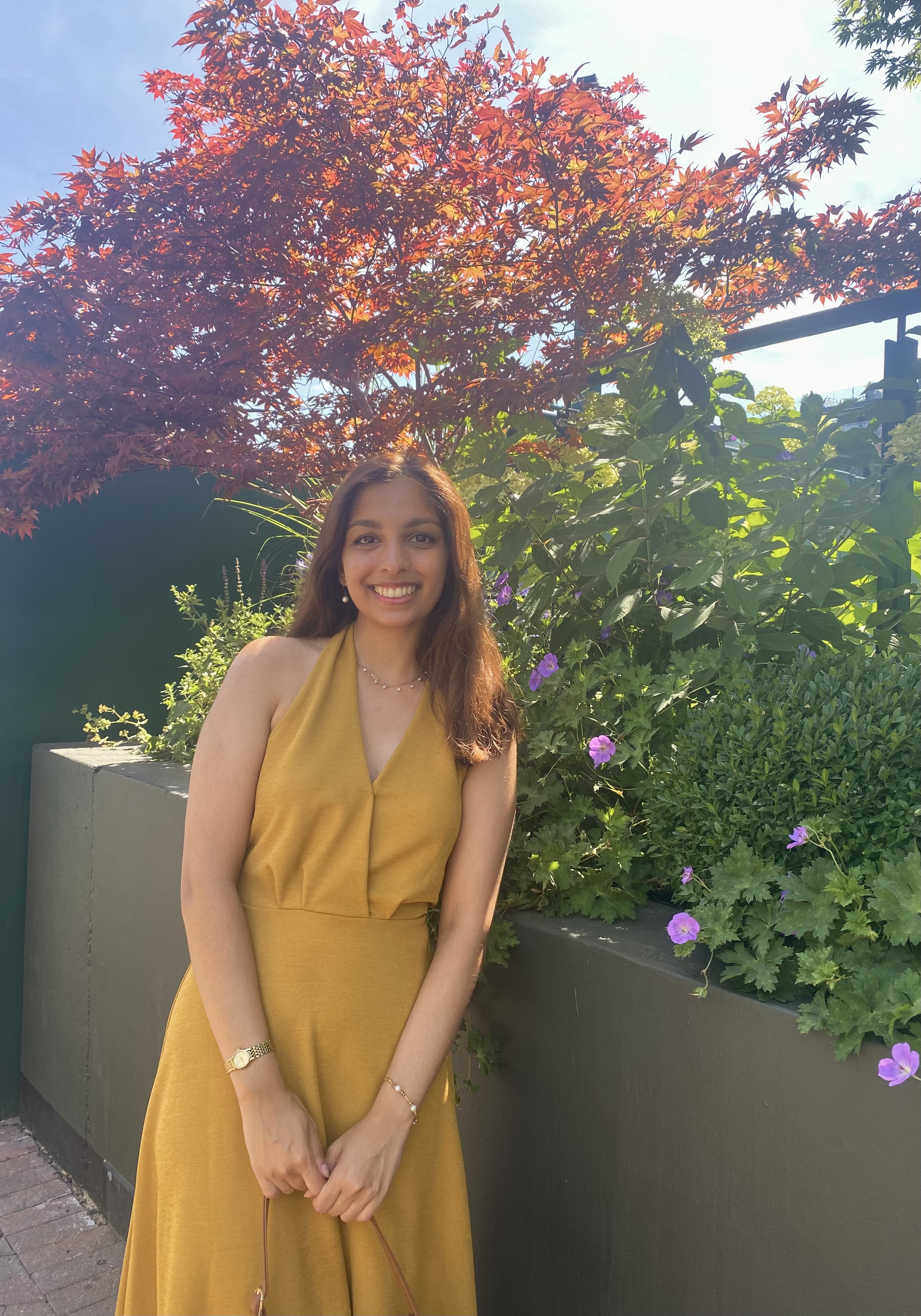
In November 2025, I had the pleasure of interviewing Nadia Adal, a graduate of B.A. Sanskrit, who attended St. Benet’s Hall, Oxford University between 2018 and 2021. Born in East London, her path to studying Sanskrit was by no means straightforward, being from a very different environment to many of her peers. Here’s what she told me about her experience at Oxford and where studying Sanskrit has taken her.
Nadia’s Path to Studying Sanskrit
Nadia’s first encounter with Sanskrit was at the Oxford UNIQ Summer School. Despite having never studied it before, she dived straight in, telling me, “I really enjoyed it! I thought I wanted to study law, but after UNIQ, I thought, I’d rather do Sanskrit instead.”
After UNIQ, she had a change of heart and realised Sanskrit was a better fit for her interests. She discovered both the university and the study of Sanskrit to be engaging and academically rigorous. The following year, she received her offer to study Sanskrit at St. Benet’s Hall and began her studies at Oxford.
First Impressions of Oxford
As anyone studying here will agree, Nadia found Oxford to be quite daunting as a first-year, noting that, “Growing up in East London, where everyone looked like me, and suddenly moving to a place where I was suddenly different was a bit difficult at first.” However, very quickly, Nadia began to feel more comfortable, with the support of tutors and newfound friends.
We also discussed how Oxford surprised her in some ways. She found the city and the institution to be far more diverse than she had previously thought. With students from a wide range of backgrounds and nationalities represented in her cohort, she found Oxford’s personal and academic environment to be well suited to reading Asian and Middle Eastern Studies (AMES).
Studying Sanskrit at Oxford
Studying a language like Sanskrit and the history and culture associated with it is by no means an easy feat, but Nadia found that the quality of teaching and academia set her up for success. “The tutors were really good, for Sanskrit especially, Oxford probably has the best in the world; they literally wrote the textbooks we were using!” The tutorial teaching system at Oxford offered her the ability to engage with what she was studying on an even deeper level and to learn from world leaders in South Asian academia.
She found the cultural studies side of the course, which all degrees in the Faculty of Asian and Middle Eastern Studies include in their syllabi, to be particularly interesting. The writing and research skills she acquired throughout that part of the course, she noted, are especially relevant to her career and life working in museums today.
The extracurricular opportunities the university offered also helped her explore Sanskrit even further. Taking part in the joint Oxford-SOAS Sanskrit reading group was an important part of her engagement with Sanskrit and South Asian history outside of the classroom. Nadia also told me that the yearly Sanskrit Department play was an incredibly enjoyable way to learn more outside of the classroom, “We also did a Sanskrit play, which was really fun, if not a little embarrassing… but it was an important and rare opportunity to bring Sanskrit theatre into the modern era.”
Life After Oxford
After graduating in 2021, Nadia pursued an M.A. in Museum Studies at University College London. Her love for the museums she grew up around in London played a major role in this decision. Enabled by her time at Oxford, surrounded by museums, she was able to gain a strong foundation in the field. “Visiting museums in Oxford made me realise how much I liked them… growing up in London where most museums are free, I had already been to many, but Oxford reaffirmed my interest.”
She has since gone on to work at multiple museums, including Wimbledon Tennis Museum and Hackney Museum, in collection management and artefact care. Using the skills acquired through her studies at Oxford every day, she has created a fulfilling and engaging career for herself. Her work helps preserve the history and culture not only of the past, but also the present, for future generations.
Advice for Future Sanskritists
For those considering studying Sanskrit at Oxford, Nadia has a few words of advice:
-
Always follow your passion and interests. The future seems uncertain, but the best choice is to always carve your own path and create a life you are both proud of and enjoy.
-
Persevere, no matter how difficult it gets. “Humanities and museums are really hard to break into, but if you love it, persevere!”
-
Don’t overuse AI. Learning a language and studying a society requires independent thinking and a personal perspective. Whilst AI tools can be useful, they should not replace actively engaging with language, texts and ideas.
Interviewed by Milton McGrory.

